Friday, March 23, 2012

Week 8 (#3): Shoptiques.com


ShoptiquesSmall fashion boutiques target a select group of shoppers who are searching for original items from designers that are not found in big-name department stores. Boutique shoppers are limited in that these smaller boutiques are exclusive and can not be shopped without traveling to visit the retail locations. A solution to this is a start-up website called Shoptiques which aggregates inventory from local fashion boutiques across the country and puts it online. Shoptiques works with a network of local boutiques across the U.S. to integrate their inventory on the Shoptiques.com website, which shoppers can visit, browse, and make purchases. Shoptiques, which has a network of freelance photographers, takes high quality photos of the boutique items and uploads them to the website with descriptions and prices. Users can browse collections from boutiques across the country that they would never otherwise have seen or known about. In order to qualify, a boutique needs to offer products that can not be found in department stores; not even Bloomingdale's or Neiman Marcus.


The site launched with inventory from over 25 boutiques, from Los Angeles, Miami, New York and Chicago. The site finds these local boutiques by partnering with magazines like Elle to find interesting stores and also receives many leads via word of mouth recommendations. Currently, boutiques are organized by location, and neighborhood on the site, and the price point on items ranges from $50 to $300. You can also shop by category (bags, shoes, tops etc.).


If a customer chooses to purchase an item on the site, Shoptiques will immediately send the boutique an email with the order and a printable FedEx label with the customer’s address. Shoptiques handles all of the payment processing and takes an undisclosed fee from each transaction.
Eventually, Shoptiques wants to expand internationally and add many more boutiques. Although I wouldn't use this website, I did find the concept quite innovative and appealing to a certain segment of shoppers.


Source:
http://techcrunch.com/2012/03/21/andreessen-horowitz-greylock-back-marketplace-for-local-fashion-boutiques-shoptiques/ 

Wednesday, March 21, 2012

Week 8 (#2): Apple's $2.65 per Share Dividend!

It's no secret that Apple is an insanely prosperous company with oodles of cash on hand; nearly $100 billion in fact. Apple announced exciting news for current shareholders and potential shareholders alike: initiating a quarterly dividend of $2.65 per share in Q4 2012, along with a $10 billion share repurchase program starting September 2012 and extending over the next 3 years. This payout will set Apple as one of the largest dividend payers of all companies. The last time Apple paid dividends was in 1995, at about $0.12 per share.


Apple's decision to initiate a dividend and repurchase stock is sure to make shareholders (and employees) elated, as well as appeal to new potential investors...as if the stock wasn't already attractive! It's nice to see that the company has investor interest in mind when deciding what to do with all of its money. With pleased shareholders, Apple's stock is likely to soar even higher!
Apple-Money

Source: 
http://techcrunch.com/2012/03/19/apple-cash/

Monday, March 19, 2012

Week 8 (#1): SmartSource Xpress App

Most of you are probably familiar with the SmartSource coupon magazine that is inserted into Sunday newspapers. This is one of the main products of the company I work for, News America Marketing. Over the past several months my company has been developing an iPad app that makes this coupon magazine available in the digital world. The app, which just launched, allows users to view the coupon magazines and "clip" the coupons, with a tap of the screen, which are then uploaded directly to their shopper loyalty cards and redeemed automatically at check out. This app, SmartSource Xpress, offers lots of great offers from popular household brand names, it ensures shoppers do not forget their coupons at home, it saves time both at home and at checkout, it's green (no paper!), and it's free!


These digital coupons are interactive and enhanced with video, recipes, and free samples. Shoppers no longer have to clip, file, or carry their coupons to the store. The app tracks your savings and allows you to e-mail yourself the list of coupons that you have loaded to your card. The app will be available on smartphones sometime this summer.


To download this free app visit the Apple store with the below link:

Sunday, March 11, 2012

Week 6 (#3): Resumes are Bullsh*t??

HireArt_logoA new company named HireArt is changing the interview process as we know it. Rather than employers reading through resume after resume (which are sometimes embellished or not a true portrayal of a candidate's credentials), HireArt improves the job candidate pre-screening process by creating online interviews that simulate a real job. Candidates are asked to complete tasks that are similar to what they would encounter on the job (for example: give a presentation, do an Excel analysis, or give a creative pitch for a new product). The responses are recorded via video or submitted as text and attachments, which give employers higher quality information to base their hiring decisions on.

This new interview process helps to better identify qualified candidates for a job by actually being able to prove their worth and skills, especially when often times potential employees are overlooked because they have unorthodox backgrounds that don't necessarily match up with what an employer thinks they need in terms of experience. Also,this process helps to identify candidates who may have oversold themselves on a resume. Since  the potential employees are actually doing the work first, before they are hired, the employer will find out sooner rather than later if they cannot perform to expectations.

Employers who use HireArt to fill a position can choose from HireArt's online library of predefined template questions or can create their own which requires the candidate to actually demonstrate, not just talk about, their skills. When the interview / questions are complete, the employer has the option to review the responses on their own or they can outsource that task to HireArt instead, which includes a team of college professors and industry experts as graders.

I personally think the HireArt system of interviewing is definitely beneficial for a company. Although it may be more time consuming and expensive for an employer to screen through these types of interviews / tasks than it would to look over resumes, the result is that the employer will have a more qualified pool of top candidates. In my experience, my department recently hired a man who clearly oversold himself on a resume and in an interview and was let go soon after because it was evident he could not perform to expectations. If my department had used HireArt and required that the man complete some sample tasks, perhaps they would have realized he wasn't a good fit before they actually used resources to hire and fire him.

Source:
http://techcrunch.com/2012/03/09/resumes-are-bullshit-hireart-is-better/

Wednesday, March 7, 2012

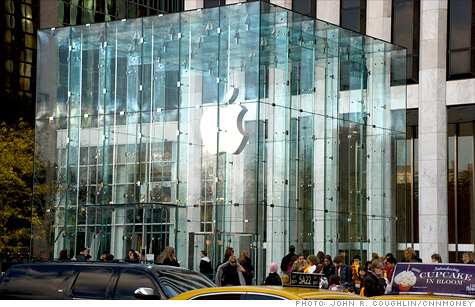
Week 6 (#2): Apple is Worth More than Poland (and Belgium, and Sweden, and Saudi Arabia, and Taiwan...)!

We all know that Apple is an insanely successful company; but you might be shocked to know that it is the world's most valuable company, having a valuation that is now higher than the gross domestic product of Poland, Belgium, Sweden, Saudi Arabia, or Taiwan!

On Wednesday, Apple's stock market value topped the $500 billion mark; making it one of the five most-valuable companies at any point in history. Only Microsoft, ExxonMobil, Cisco, GE, and Intel have ever surpassed that mark. Apple is one of the fastest growing tech companies and had sales growth of 73% last year, and shares currently breaking the $500 mark! Surprisingly, though, is that Apple stock is much cheaper than some of the other, less-sucessful, tech companies like Netflix, Zynga, LinkedIn, and the soon-to-be public Facebook. 

Here are some other things that Apple is worth more than:
  • The construction of the Interstate Highway System across America
  • 1 billion iPads
  • All the money spent on electricity for an entire year in the U.S.
  • The entire National Football League...times 10!
  • All the gold at the New York Federal Reserve
  • All the illegal drugs in the world
  • The Star Wars, Star Trek, Harry Potter, Stephen King, and Twilight franchise combined
  • All the farmland in Iowa and South Dakota
  • 10 times all the child support paid last year
  • Every single home in Atlanta, GA combined
  • The Great Wall of China

apple-store-nyc.jc.top.jpg

Sources:

Tuesday, March 6, 2012

Week 6 (#1): "How Tweet It Is..."

[25socmed]
When I first read this article, I had to read it a second time to make sure I was understanding it correctly...hedge funds are now using TWITTER and SOCIAL-MEDIA sites to make investment decisions?? I don't know about you, but I wouldn't want my investments to be determined by people's Facebook statuses and Tweets...or maybe I would?


More than a dozen hedge funds and high-frequency traders are now making trades guided, in part, by data from social-media sources like Facebook, YouTube and Twitter. There are even social-media analytic firms that supply the investors with analyses of social-media activities based on sentiment (an emotion or attitude about something; quite often about a stock or company). These activities are then crunched by computer algorithms to find market-related opinions and tally what those opinions are; thus predicting the direction of the market. This use of market sentiment isn't totally new; investors have surveyed and tallied positive and negative news stories in the past to gauge their decisions.


Researchers believe that although this tactic is used mostly as a supplement to trading strategies, social-media trends could provide valuable insight into short-term market direction. Would you trust your money to be traded off Twitter information??


Source:
http://online.wsj.com/article/SB10001424052970204778604577239574141848142.html

Sunday, March 4, 2012

Week 5 (#3): RFID in Tracking Foot Traffic in Stores

RFID shopping carts
I work for a marketing company doing market research for clients. Quite often we get requests for recommending ad placement locations in grocery stores. For example, Kraft may want to know what other location, besides the pasta aisle, may be a good place to put its macaroni and cheese banner advertisement. Foot traffic is an important part in making a recommendation; clients want high trafficked areas so their ads have more impressions...makes sense. One of the data sets that my company works with when making recommendations is the Sorensen PathTracker aisle traffic data, which utilizes RFID technology. Before this technology, market research firms gathered such foot traffic information by placing trained observers around the stores to watch shoppers' movements and noted them on clipboards. Today, smaller stores may use video cameras to track movements, and in larger
stores RFID is being used. 

The PathTracker system places RFID tags on shopping carts and baskets. A series of antennae are implanted in a store's ceiling and communicate with the RFID tags. The system tracks individual shoppers as they travel around the store, in real time. With these tags, PathTracker can identify the "hot spots" and "cold spots" throughout the store where shoppers most often travel and where they don't. Some important findings from PathTracker are: shoppers prefer to go down aisles starting at the back of the store and moving to the front, and shoppers prefer to shop counter-clockwise.

Using RFID in tracking shoppers is more advantageous than manual tracking or even video tracking. With RFID the exact location of the shopper is known as well as how long they stayed in that area, and is transmitted instantaneously. With the insights provided by RFID tracking, both clients and retailers can more effectively advertise with the hope of getting more eyes on their product/advertisements and thus a higher return on their investment.